
PHPA Players and Alumni Invest in Leadership Development Through Royal Roads Program
May 15, 2026
Royal Roads’ Sports Leadership leadership course helps PHPA members strengthen skills for hockey and future careers alike.

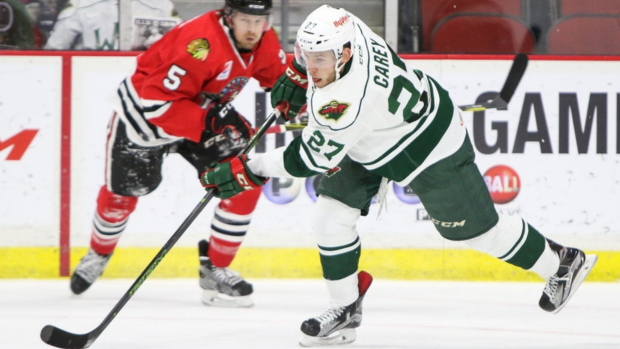
Growing up in the Hamilton, Ontario area Matt Carey was always on the ice – whether at the local community rink or on the outdoor rink his father would often build. Whenever he and his older brother, Greg, were on the ice – the younger Matt was often setting up his older brother.
“We would pass back and forth, but I’d always try and set him up for a goal so I never usually shot [the puck],” Matt explained. “Growing up, all I did was set him up and that’s what college ended up turning into – me being a center and him being a winger and having that fantastic release. It was just easier to try and make plays.”
The two were supposed to be reunited on the ice in 2012 at St Lawrence University, but Matt was forced to redshirt due to an unforeseen eligibility issue – preventing him from playing college hockey that fall in the 2012-13 season and from any contact with the men’s hockey team on the ice or at the training facility.
The end result was what Matt described as the most difficult year of his life, having to be in the gym during the week at 5:30 a.m. and on the ice and off the ice and out of the facility before the men’s team arrived.
He also excelled outside of the gym/hockey rink – in the classroom – maintaining straight-As his first year at St Lawrence University while redshirting and unable to play college hockey.
“I got all 4.0’s in all my classes. I just took that year extremely seriously,” Carey recalled his first year of college while awaiting NCAA eligibility to play the following fall. “I couldn’t work out with the team. I couldn’t go on the ice with the team. So I had to make sure to get in there before them and get out before them.”
He played men’s league hockey that year, watching his brother Greg’s junior season and analyzing the NCAA hockey game through watching the game from upstairs – learning how collegiate hockey was played before stepping onto NCAA the following year.
“I visually got to see what college hockey is like, how my brother played, what the defensive structure played like,” Carey explained. “And I think going into the next year, having all those moments of success our team had when we scored or did well offensively was because of [me] being able to watch.”
What turned into a full year of training, both physically and mentally, ended up being a big blessing in disguise for Matt entering his first season of college hockey in 2013-14.
Matt tallied 37 points (18 goals, 19 assists) in 38 games in that 2013-14 season at St Lawrence University while his brother Greg totaled 57 points (18 goals, 39 assists) in 38 games and finished as the runner-up for the Hobey Baker award that spring to Boston College’s Johnny Gaudreau.
Matt’s success didn’t go unnoticed, as he signed an entry level contract with the Chicago Blackhawks on March 18, 2014 and made his NHL debut ten days later on March 28. He scored his first career NHL goal in his second game on April 12, 2014 against Nashville goaltender Pekka Rinne.
“It was the best year I’ve had in terms of, like, actually developing,” Carey said of the 2012-13 season leading to his success the following year, adding, “and I think what a lot of these kids don’t realize now is, like, how hard it is to actually make the NHL. Yeah, I only played one year college hockey [and] didn’t play a whole year of hockey before that, but I worked my ass off to get there.”
As an undrafted college free agent signing, the two-year entry level contract with his first year of the deal burned at the tail end of the 2013-14 season provided a short runway for Carey at the pro level.
After his rookie season in the AHL with the Rockford IceHogs, the Blackhawks opted to not tender Carey a qualifying offer – making him a free agent that summer.
Carey signed an AHL contract with the Iowa Wild and spent a majority of the 2015-16 season with their ECHL affiliate in Quad City – tallying at a point-per-game pace with 47 points (25 goals, 22 assists) in 49 games before an AHL contract with the Hartford Wolf Pack in 2016-17 saw him have a breakout year spent entirely in the AHL as he recorded an AHL career-high 21 goals and added eight assists in 73 games.
He quickly found himself making the most of limited opportunities in a bottom-six role in Hartford despite having some offensive success in a 21-goal campaign, recalling playing about eight and a half minutes a game that season.
That veteran role, or ‘evening out a line’ as Carey referred to it, continued as he headed overseas to play professionally in Sweden, as he actively engaged with the younger players on the teams he played on and worked with them to hone their skills.
“I would train guys after practice all the time. Like, I would have five or six guys who wanted to do a drill with me before practice, and like, five or six guys after that wanted to drill with me,” Carey recalled of his mini-sessions with players even during his playing days.
Carey’s passion for skill development continued past his playing days, which came to a sudden end during the uncertainties the COVID pandemic played on professional hockey leagues both in North America and around the world.
“I always knew I was going to [pursue] it. I had my website up and running within two days of returning home from [ECHL]-Norfolk,” Carey said of transitioning quickly from playing to skill development coaching and advising.
Starting his work with players aged 16 and older, Carey and a former Hartford Wolf Pack teammate of Carey’s, Christiano DiGiacinto, formed a team in a 4-on-4 summer pro league of OHL-athletes and pro players staying sharp during the offseason.
At one point, his team was near being removed from the league because of the age and relative inexperience in high-level hockey of the majority of the team – according to Carey, who said one of his earliest moments exhibiting pride for the young players he was helping was when the team won the summer league’s championship.
“It was all my guys that trained with me throughout the summer, and so it’s kind of cool to see, like, the training that I developed actually helped the players win a championship,” Carey explained. “So that was so cool to see – they were all under 18 and then, like, the other teams are, like 25-30 [years-old].”
That feeling of pride for his players and passion for the game is a driving force behind Carey’s desire to help others.
“Every time I get a chance to be able to help a player, I think – I would have wanted that in my situation. So I get to relive my career over and over again through these kids, trying to give them guidance on what decision I would have made if I was in their shoes,” Carey said. “I’m watching their videos every day. I get close to them. They learn to understand me. They learn to trust me, because they end up doing the drills, and it’s exactly what I would have done if I was continuing playing. This is training I would have done.”
The integration of video analysis with real-life drills that can be – and are – used in game situations is something Carey says allows players he works with to fully buy-in to and improve their skills.
“I think being able to study the game from up top [in college] especially is why I do all these videos throughout my business. Because watching video and watching how something is done is a lot easier to analyze and take example than on a board, drawing X’s and O’s. And that’s why I demonstrate in a lot of my drills,” Carey said.
Hockey players in the Niagara region interested in learning more about Matt Carey Hockey and the skills training and services available are encouraged to visit his website MattCareyHockey.com.
Royal Roads’ Sports Leadership leadership course helps PHPA members strengthen skills for hockey and future careers alike.

Our player-led executive committees were an integral part of securing key gains in the new collective bargaining agreements that were negotiated earlier this season.
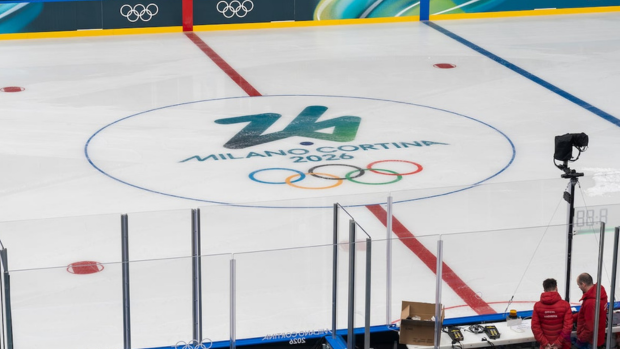
Thirteen PHPA members represented five countries at the 2026 Winter Olympics in Milan, delivering memorable performances on hockey’s biggest international stage.



Copyright © 2026. Professional Hockey Players' Association. All rights reserved.