
PHPA Players and Alumni Invest in Leadership Development Through Royal Roads Program
May 15, 2026
Royal Roads’ Sports Leadership leadership course helps PHPA members strengthen skills for hockey and future careers alike.

Under the leadership of Executive Director Brian Ramsay, player-led executive committees in the Professional Hockey Players’ Association (PHPA) successfully negotiated new collective bargaining agreements with the American Hockey League (AHL) and the ECHL earlier this year.
“I think they showed phenomenal leadership representing their membership,” Ramsay said of the executive committees. “They were extremely engaged the whole way through. They were active in negotiations. That was reflective in the way that the deals came together.”
Members from both the ECHL and AHL Executive Committees spoke about their experiences throughout the process, reflecting with pride and their desire to make an impact off the ice – to move the game forward for the benefit of both current and future professional hockey players in both leagues.
Justin Vaive, Cincinnati Cyclones – ECHL Executive Committee
In his fourth year as a member of the PHPA’s ECHL Executive Committee, Justin Vaive has been heavily involved with the PHPA for over a decade – being a PHPA team representative for the past 12 years.
While he had been around for previous CBA negotiations, this was Vaive’s first at the bargaining table directly negotiating with the ECHL on behalf of players leaguewide.
A seasoned veteran on the ice, the pressure to perform has become second nature for Vaive over the years. Being on the proverbial frontlines of CBA negotiations introduced a new kind of pressure.
“In the back of your mind, you’re kind of thinking, okay, after this I’ve got to go back into the locker rooms and stuff like that. I want guys to be happy with the outcome, and not sitting there wondering what we were doing for the last six, eight months,” Vaive explained, adding the Executive Committee needed to be a voice for all players. “I think it was more so just thinking about everybody and kind of trying to get some wins and things that affected everybody, and not just certain smaller groups but the league as a whole.”
Throughout the negotiating process, Vaive developed an even better understanding of things from a broader perspective at the league level across the entire membership – engaging in conversation with players from across the ECHL to answer their questions and listen to their concerns.
“When you actually peel back the layers, and you talk with all the owners in the league and the teams, you realize that there is a lot that goes into every tiny little thing in the CBA, and also why it takes so long to negotiate something like that,” Vaive said of the negotiating process. “It’s not just rash decisions that got you to where you’re at. It’s a lot more than that, for sure.”
While increases to player salaries, team salary cap and per diem are mentioned in the headlines, several important resolutions in player safety and health & wellness for ECHL players will also be extremely beneficial for its members coming out of these CBA negotiations.
“Obviously (that’s) the number one thing that everybody always just points to and looks at,” Vaive concurred, before adding, “To be completely honest, I think the revamp of the year-round healthcare for the players and the scheduling, with the wear and tear of the hockey season compounding on people’s bodies, that was one of the biggest things that we were fighting for.”
Ultimately, the executive committee’s goal to move the needle forward on many different aspects of the CBA at the most recent negotiations sets the stage for future players to continue advancing important issues and taking it to the next level in future negotiations.
“I think the ability to change the scheduling process, get that insurance and different equipment allowances and things like that, I think down the road guys will realize how big and how important that stuff was,” Vaive said of paving the way for future players. “It’s stuff that I never had when I first got to the league. It’s definitely nice to see.”
Todd Skirving, Kalamazoo Wings – ECHL Executive Committee
Todd Skirving has been a PHPA player rep since the 2018-19 season, filling in for a previous ECHL Executive Committee member three years ago and assuming the role ever since.
His continued involvement and engagement in CBA discussions within the union culminated in being at the negotiating table with the ECHL during the most recent CBA talks.
While the process ended up taking over a full calendar year, it was the preparation going into the negotiations that had Skirving feeling good about things from the get-go.
“I mean, credit to (PHPA Executive Director) Brian (Ramsay). I feel like we hit it out of the park hiring him. Obviously, he had experience going through it with the CFLPA, so having his leadership and his guidance honestly made it very seamless,” Skirving said of the preparations made heading into the negotiations. “He educated our committee on all the ins and outs, got us on the same page, allowed us to understand the situation better, how we’re going to do things. And then from there, it was on the committee, ourselves, and Brian and our PHPA staff to kind of relay that message through team visits and through the player reps. Fortunately, all the players and teams throughout the league put their trust in us. It was nice to have their trust, to get everyone on the same page and do the things that we did to get the deal that we did.”
Even throughout the process, it never felt like work for Skirving. He thoroughly enjoyed being able to represent his peers.
“I think living through it was an eye-opener itself. All the work that goes into it. I’ve been in this league for so long. I’ve been a part of everything, seen everything and what’s best for the players. But just going through that process, talking to different people, lawyers, staff members, guys on the other side and whatnot, and going to those meetings. I think being in those meetings as a player was just very beneficial, being able to explain the player side of it and kind of tell them things that we’re living through,” Skirving said of using the opportunity and his experience as a player in the ECHL to give a clear perspective on what things are like for players around the league.
Skirving shared the sentiment of other Executive Committee members in being proud to be part of the CBA process in advancing the game for not only current members but for future players coming into pro hockey down the road.
“You see it in other jobs and companies throughout the world that go through these negotiations, and to be a part of one like that is probably something I won’t ever get to experience again,” Skirving said, reflecting on the negotiations over the past year. “Being able to understand that from the side that we’re on and being able to maybe help other organizations and player unions down the road, I thought it was a really cool experience, and something I was very grateful to go through.”
Joe Hicketts, Ontario Reign – AHL Executive Committee
Joe Hicketts joined the PHPA’s AHL Executive Committee during the 2024-25 season leading into the start of the CBA negotiations with the AHL, having served as a team representative for several years.
With previous committee members retiring and/or signing overseas for the 2025-26 season, Hicketts stepped up alongside Chris Terry and Abbotsford Canucks forward Chase Wouters as the player-representatives at the negotiating table for the AHL membership.
“It was my)first time sitting at a table and in any kind of negotiating setting, so I definitely learned a lot,” Hicketts said of being at the negotiating table. “There’s a lot more to the game than just hockey, with the business stuff. It was definitely an eye-opening experience.”
Much like with the ECHL CBA negotiations, getting the AHL membership on the same page in preparation for the CBA talks with the AHL was the crucial first step.
“Making sure that everyone had a voice was a big thing for us. You know, from rookies to guys who’ve been around for 16-17 years, we wanted all the information we could get,” Hicketts explained of the early process of engaging in conversations with players around the league to get their input on topics and issues. “We wanted to present the membership a package that they could be proud of – that we could be proud of – and that touched on every area that we had heard feedback on.”
One topic that has long generated discussion is the AHL’s development rule and the limit to how many ‘veteran’ skaters (non-goalies) can be in the lineup.
First instituted for the 1994-95 season, the rule has stood largely unchanged over the past 30 years, with six veteran skaters being the limit and one of those six skaters falling between 260 and 320 professional games of experience at the start of the season.
In 2020-21, an exemption was added that a player must be at least 25 years old by July 1st of the upcoming season to be considered a veteran.
Under the new CBA, a slight tweak to the league’s development rule removes the 260-320 game requirement for one of a team’s six veteran skaters eligible to be in the lineup. Moving forward, AHL teams will be able to dress six veteran skaters who enter the season with over 260 games of pro experience – even if all six have played over 320 professional games.
“We thought trying to open up another spot, make it a little bit less restrictive, will help guys stay if they want,” Hicketts said, explaining the reasoning behind the change to the development rule. “We wanted to be able to give every one of our members the opportunity to play, and within the restrictions of what the league wanted, and we felt that opening up that exempt spot to a full veteran was probably the best way to go about it.”
Having lived the experience as a player, Hicketts was able to gain an additional perspective throughout the negotiating process on how proposed changes affect not only the membership but the league and its teams as well.
“At the end of the day, it’s a partnership. And if we can be respectful in that relationship, and if they can see our point of view, we can see their point of view, it’s going to make meeting in the middle a lot easier and leave the league in a better place,” Hicketts said. “I think that was the main thing from our committee’s standpoint was that we have an opportunity to maybe make it a little bit better for the players, but that’s also going to make the league better. That’s what our focus was. We want to make the product on the ice as good as we can, with the amount of things we can change or tweak or get rid of. When that time came to present the entire proposal to the membership, I thought we accomplished that to the best of our ability.”
Chris Terry, Bridgeport Islanders – AHL Executive Committee
Chris Terry is in his third year as a member of the Executive Committee, and was part of the CBA negotiations on behalf of AHL players, detailing just how long of a process and how involved it was.
The initial face-to-face meeting between the PHPA and AHL for CBA talks was in Coachella Valley at the 2025 AHL All-Star Classic last February.
“Following that, we met in Denver in May, Hilton Head in July, Toronto in August, and then Springfield in late September. And obviously, those are just the in-person meetings that we had with the league,” Terry said after rattling off all of the meeting places into the summer.
“It was a lot of work, but I wouldn’t change a thing. It was such a great experience, really proud of what we got for the players, and really proud to have Brian (Ramsay) lead us. I think there’s just so much that I learned from him, just an invaluable person for our union, that the leadership at the top couldn’t be better.”
One area of the CBA that took longer to get through than others was in regard to Name, Image & Likeness (NIL) – something that has exploded in recent years, particularly in college sports.
“It’s a licensing thing for us, but obviously it’s kind of unchartered waters with NIL. It’s relatively new within the last couple of years, but huge amounts of money are being spent in college sports, not only hockey. So it was important for us to raise the bar in that aspect for us as well,” Terry said. “I don’t think that there was as much disagreement on things as we both needed to learn and understand what licensing and NIL looks like. I don’t think we can project what it’s going to continue to look like. So that area just took longer. But again, another area that that we were happy with and happy to have gotten done in this CBA.”
All in all, Terry was proud to be part of the negotiations to help push things forward for both the players and the league they play in.
“It was a really unique experience, one I was excited about and – coming out on the other side – really fortunate to have gone through and learned so much. I think it was challenging at times, but so rewarding at the same time,” Terry said, reflecting on the whole experience over the past year-plus. “I think you have to keep all the players in mind when you’re working, just like on a team. You’re working for a team that collectively helps everyone. So, keeping everyone in mind and being at the table representing the players in the union was something I didn’t take lightly.”
“I think back 17 years ago when I came into this league, and the things that have changed – and for the better. So, it’s been a focus to continue to make progress, continue to elevate the level of every aspect of the CBA to leave this game in a better place whenever my time comes.”
Raising the Standard – key gains for PHPA Members in the new CBAs
American Hockey League:
ECHL:
Royal Roads’ Sports Leadership leadership course helps PHPA members strengthen skills for hockey and future careers alike.
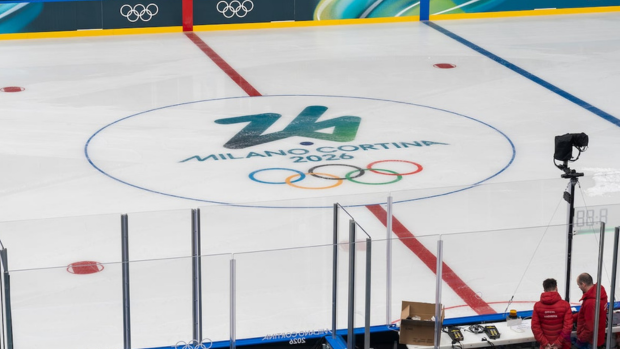
Thirteen PHPA members represented five countries at the 2026 Winter Olympics in Milan, delivering memorable performances on hockey’s biggest international stage.
Thirteen PHPA members, representing five different countries, are set to compete at the 2026 Winter Olympics.


Copyright © 2026. Professional Hockey Players' Association. All rights reserved.